Your Four Donor Reports Are Asking the Same Question
By RaiseTell Team ·

Open your development toolkit and you'll likely find the same four reports every shop runs: LYBUNT (gave last year but not this year), SYBUNT (gave some year but not this year), a lapsed report, and an anniversary or renewal report. They feel like four different lenses on your donor file — four angles, four jobs.
They're not. Look closely and all four are asking a single question: who stopped?
LYBUNT: who stopped since last year. SYBUNT: who stopped at some point. Lapsed: who has stopped long enough to count as gone. Anniversary: whose giving date has come and — if nothing arrives — who is about to stop. Every one of them keys off absence. They fire when a gift is missing or a date passes with nothing behind it. They are, in the most literal sense, reports about donors who have already gone quiet.
That's genuinely useful. But it leaves an enormous blind spot, and it's hiding in plain sight.
The donors who are still giving — and still changing
The four reports can only see a donor once they stop. So the donor who is still giving every year — but giving a little less each time, or suddenly a lot more — is invisible to all four. They haven't stopped. No absence, no trigger, no report. Yet their behavior is changing in ways that should absolutely change what you do next.
Consider a real pattern from one organization's file. A donor gave $86,712, then $65,074, then $44,583, then $26,075 — four consecutive years, each one lower than the last. That is a donor in freefall: they've shed roughly seventy percent of their giving in four years. And here's the part that should stop you cold: across those four years, the number of standard reports that flagged them was zero. Not one. Because every single year, they gave. They were never absent. They were never lapsed. By the only question the reports know how to ask — did they stop? — the answer was always "no," right up until there was almost nothing left to lose.
The blind spot is bigger than it looks
It would be comforting to treat that donor as a freak case. They aren't. When you stop asking "who stopped?" and start asking "who's changing?", the scale of what the reports miss becomes hard to ignore.
In that same organization's file, 832 donors gave in FY26. Of those active, still-giving donors, 644 — 77.4% — carried at least one actionable signal: a meaningful change against their own history that warranted a look, a call, or a decision. None of them appeared on the four reports, because every one of them was still giving.
Sit with that number. More than three-quarters of your active donors may be sending a signal right now — and the entire standard reporting stack is structurally incapable of showing it to you, because it only knows how to detect absence, and these donors are present. The data was there the whole time. The insight wasn't.
A better question: who's changing?
This is the shift at the heart of how we think about a donor file. The four reports ask who stopped? The more valuable question — the one almost nobody's tooling answers — is who's changing?
"Changing" has to be measured against the donor's own history, not a global average or a fixed threshold. A donor dropping from $86,712 to $26,075 is a five-alarm fire even though $26,075 is still, in absolute terms, a wonderful gift — a threshold report keyed to "gifts under $1,000" or "hasn't given in 18 months" would sail right past it. The signal isn't the size of the gift. It's the direction and slope of the donor's giving relative to where they've been.
And crucially, the blind spot works in both directions. The same reporting that misses the donor quietly fading also misses the donor quietly surging — the one whose giving just jumped well above their own norm and who is signaling readiness for a very different conversation. Loss-oriented reporting is blind to good news, too. (More on that side of the ledger in a coming piece.)
What this means for your week
None of this is an argument to throw away LYBUNT and its siblings. A donor who has genuinely lapsed still needs a win-back, and those reports catch them. The point is narrower and more important: absence is the last signal, not the first. By the time a donor shows up on a lapse report, the change that predicted it has usually been visible in their giving for years — you just had no report that surfaced it while there was still time to act.
That's the difference between a report and an analytic. A report answers a fixed question — did they stop? — and hands you a list. An analytic reads each donor's history and tells you what's moving: who's fading while still giving, who's accelerating, who's holding steady, and who needs your attention this week for reasons no absence-based report will ever raise.
Seeing the donors your reports can't
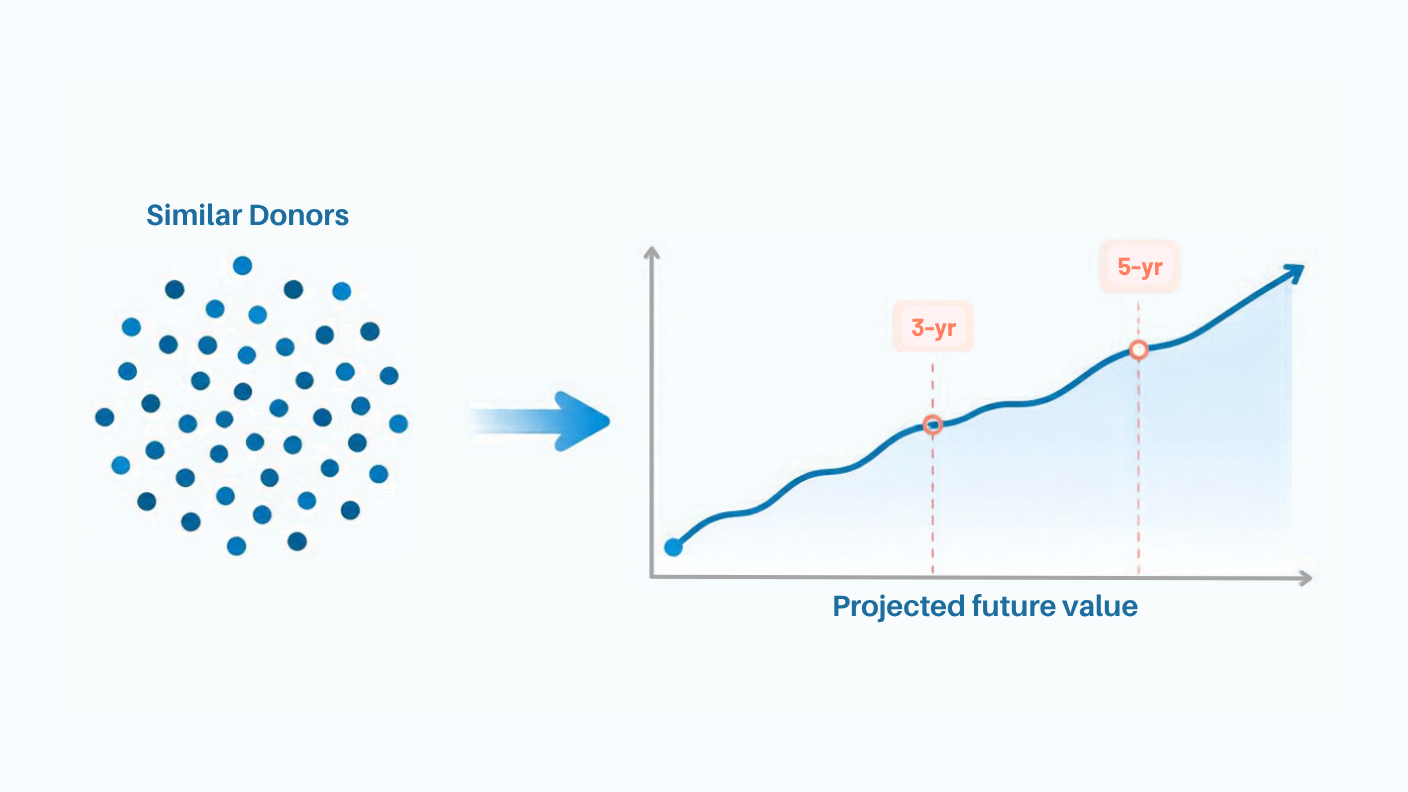
This is exactly what RaiseTell is built to surface. Instead of waiting for a donor to go absent, it reads each donor's giving against their own history and flags the ones who are changing — the quiet faders still giving every year, and the quiet climbers ready for more — so the 77% your standard reports can't see becomes a working list you can actually act on.
Your four reports aren't wrong. They're just all asking the same question. The donors who will make or break next year are the ones still giving today — and quietly telling you where they're headed, if only something were listening.
Want to learn what hidden revenue may be in your donor data?
RaiseTell reads each donor's giving against their own history and surfaces the quiet faders and quiet climbers your standard reports can't see.
Download the guide