How Much Revenue Is Hiding In Your Donor File?
By RaiseTell Team ·
Every donor base is a leaky bucket.
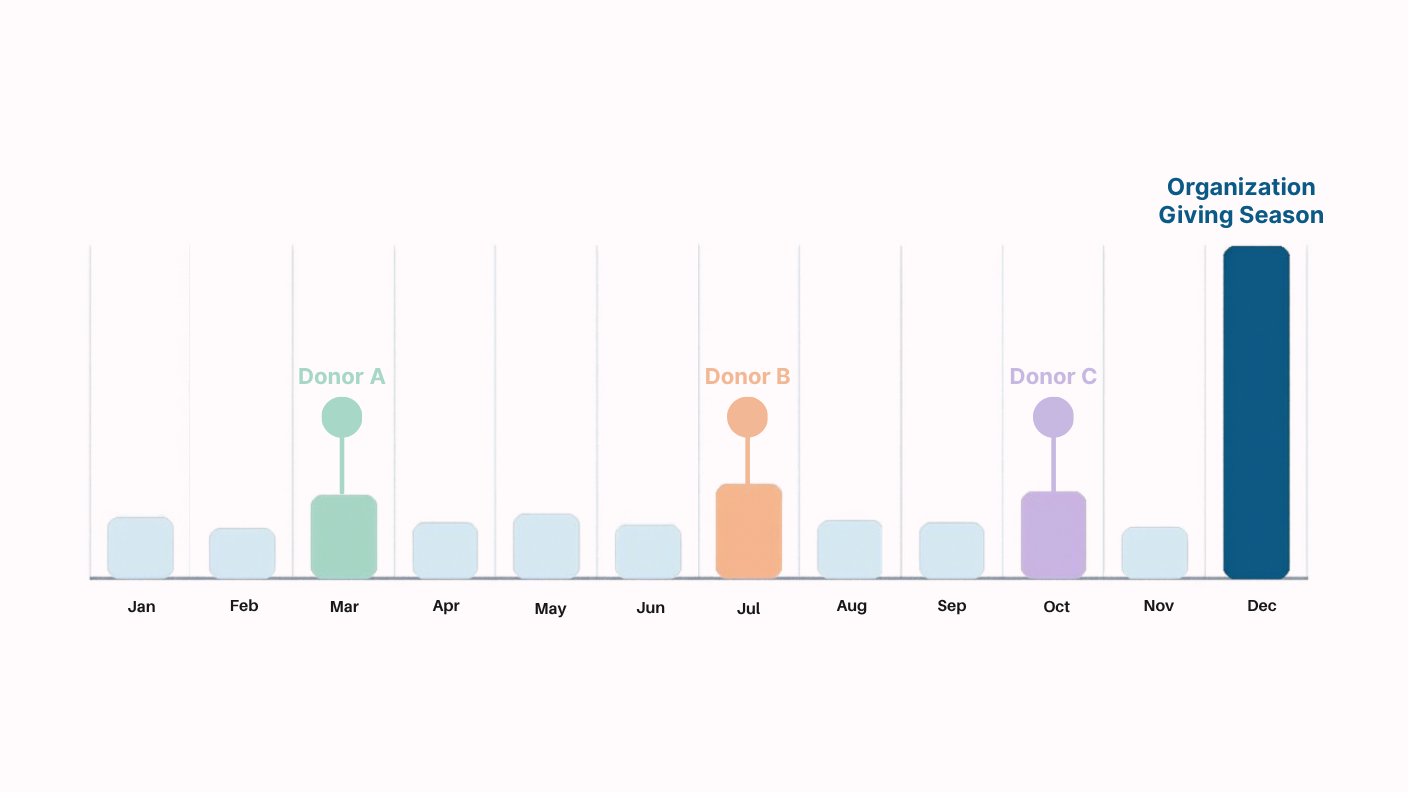
Some donors move. Some pass away. Some quietly age out of giving or shift their priorities. A portion of your file leaves every single year, and there's nothing you did wrong to cause it — it's simply the nature of the work. So yes, you should always be acquiring new donors. Replacing that natural attrition is non-negotiable; a development shop that stops filling the top of the bucket is one that's slowly emptying it.
But here's the part most fundraising plans skip over.
When the board asks for new revenue, the reflex is to go find new people. And acquisition is the most expensive, lowest-odds way to do it. You're paying to reach strangers who've never heard of you, hoping a fraction convert into first-time donors who may or may not ever give again.
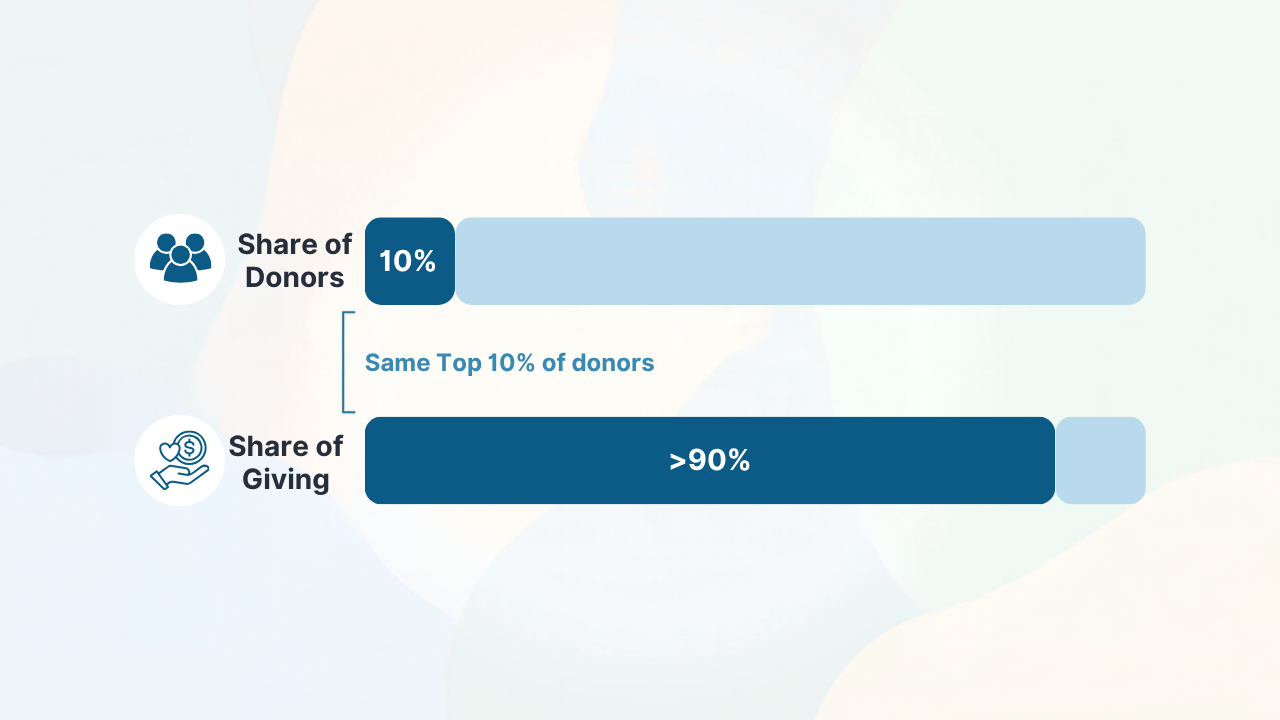
Meanwhile, the highest-probability source of new revenue is sitting in the file you already own — people who have already demonstrated interest in and commitment to your mission. They've raised their hand. They've given before. The relationship already exists. And in almost every organization I've looked at, that's where the next dollar is most likely to come from.
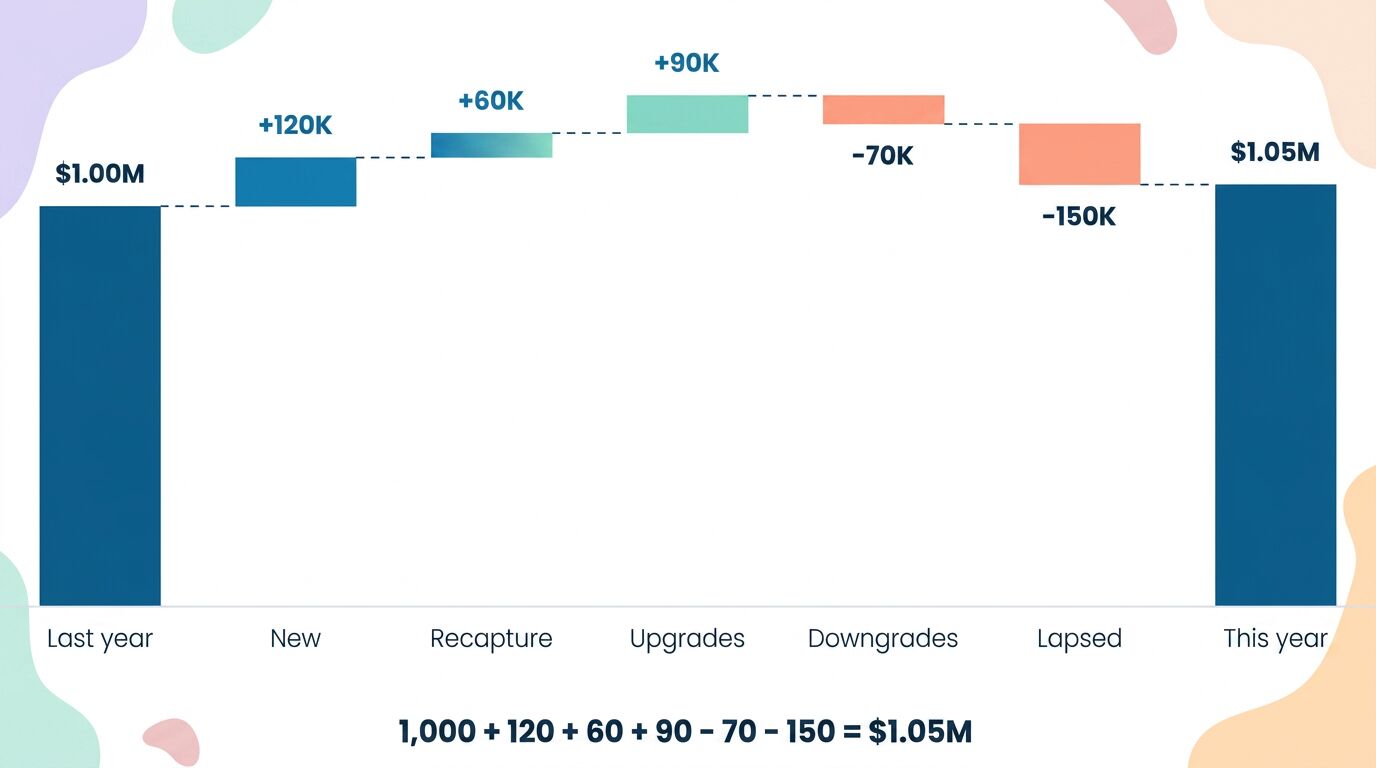
You know your total. You don't know your drivers.
Ask most teams how they did last year and they'll give you a number to the dollar. Ask them why that number was what it was — which donors grew, which quietly pulled back, which were one renewal away from leaving — and the room goes quiet.
That gap matters more than it looks. Revenue you can't explain is revenue you can't repeat, and it's revenue you can't protect. If you don't know which relationships carried the year, and the trajectories those donors are on, you can't tell whether next year is built on solid ground or on donors who are already drifting toward the door.
The total is a scoreboard. It tells you what happened. It tells you nothing about who's about to change their mind — while there's still time to do something about it.
Where the hidden revenue actually hides
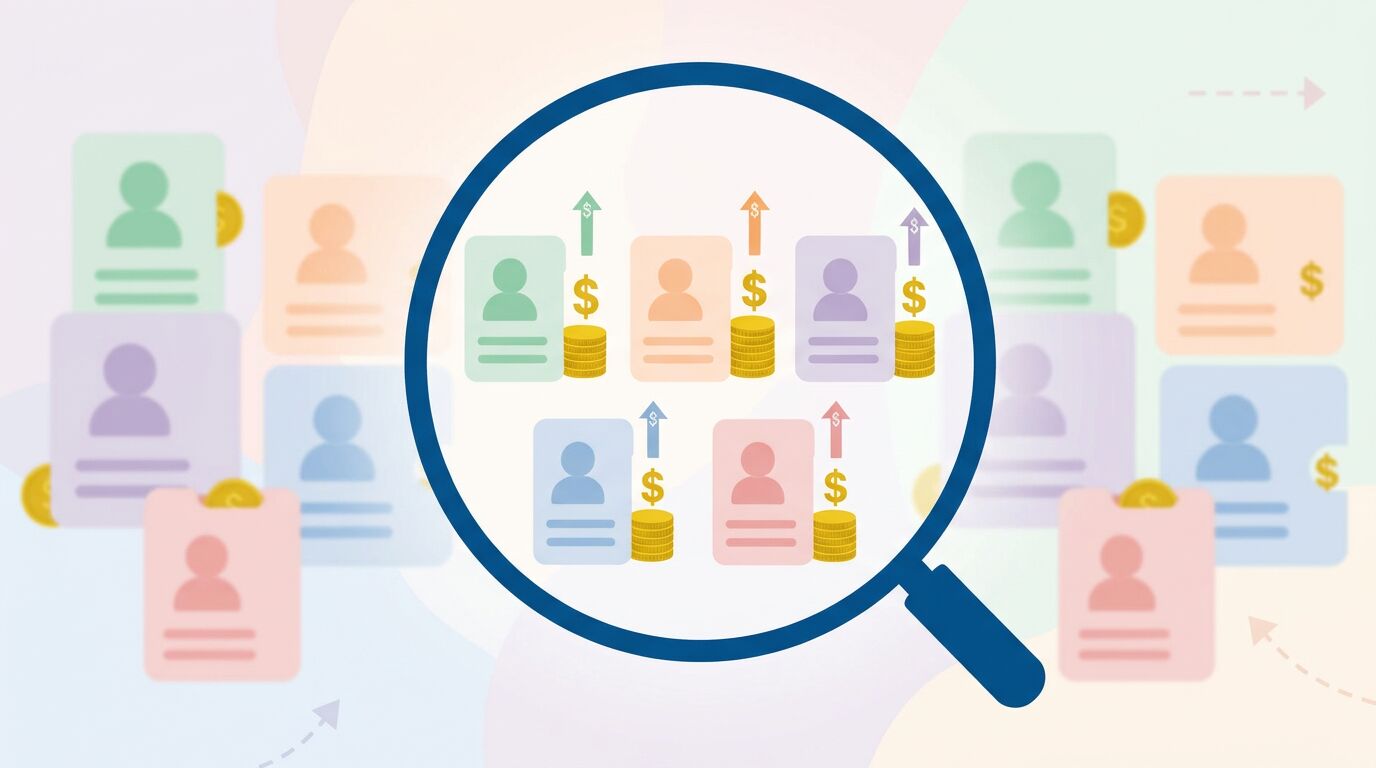
When you stop looking at the topline and start looking at the file underneath it, the same four patterns show up almost everywhere — and every one of them is a person who has already shown you they care:
Donors about to lapse. A meaningful share of your file gave last year and hasn't yet given this year. Some of them are gone. Many are simply waiting for a reason — a thank-you, a call, an ask that fits. The window to keep them is open right now and closing quietly.
Donors who are quietly declining. These are the dangerous ones, because nothing alarming happens. They don't leave. They just give a little less each year. $1,000 becomes $750 becomes $500, and because they're still on the active list, no one notices the slide until it's most of the way down.
Recapture candidates. Lapsed donors are not strangers. They already said yes once. Re-engaging someone who's given before consistently outperforms acquiring someone who never has — yet most reactivation effort is sporadic at best.
Major prospects you already steward as mid-level. Some of your best future major gifts are sitting in your file right now, giving $500 a year, capable of far more, and waiting for someone to build the relationship. You don't need to find them. You need to recognize them.
None of these require a cold stranger. Every one is a warm relationship you've already earned.
Why this revenue stays hidden
It's not a competence problem. The best fundraisers I know are buried in it.
The information exists, but it's scattered across gift records, spreadsheets, and a CRM that was built to store data, not interpret it. Seeing who's slipping requires comparing this year to last, donor by donor, across thousands of records. Spotting a quiet decliner or a donor who has been upping their support recently means catching a trend, not a transaction. No one has time to do that by hand every week — so it doesn't get done, and the revenue stays in the dark.
So teams default to the lever that feels most visible: acquisition. It's necessary work. It's just rarely the most efficient next dollar — and when it crowds out the existing base, the bucket drains faster than the new water coming in.
Seems easy enough. So why isn't it working for us?
Because pulling the list is the easy part — and the bare list is the problem.
This is exactly what most teams already try to do. They run a lapsed-donor report, hand a development officer a stack of names, and then very little moves. Not because anyone's lazy, but because a list of names is a report, not a tool. It tells you what happened — Jane lapsed — and stops there. It doesn't tell the officer what to do about it.
So every name turns into a research project. Why is Jane on this list? When did she last give, and how much? Is this a one-time blip or a two-year slide? Was she an event walk-up or a fourteen-year loyalist? Is she even worth the call? Answering that for one donor takes time. Answering it for three hundred is a week nobody has — so the list sits, and the revenue keeps draining. That manual research is the work development officers quietly dread, and it's the part data people often don't see.
Here's the distinction that changes everything: a report tells you what happened; an analytic tells you what to do. The test is simple — if a fundraiser reads it and does nothing differently, it was just a report.
Look at one record. A typical lapsed-donor report shows: Jane Smith — last gift $250, lifetime $3,750. Nothing to act on. The same donor surfaced as an analytic reads: fourteen years of giving, a four-year streak that just broke, declining two years running, 38% lapse risk but still saveable, roughly $1,400 of value if retained, usually gives in July and December. One of those is a name on a list. The other says call her this week — and tells you why.
That context isn't sitting in your database waiting to be exported. The most valuable data in fundraising has to be calculated — each donor measured against their own baseline, their cohort, and their trajectory over time (context = comparison + calculation + time). Roughly a dozen raw fields become hundreds of derived signals: streaks, trends, lapse risk, seasonality, retained value. That's the work that buries development officers when it's done by hand — and exactly the work they shouldn't be doing by hand.
Seeing it every week, not once a year
Even if you build these lists by hand once, they go stale fast. A donor who looked "fine" in January is a lapse risk by June. And the calculations underneath — streaks, trends, lapse risk, retained value — have to be re-run continuously, or you're acting on a snapshot that's already wrong.
This is the gap RaiseTell was built to close. It does the calculating, not just the listing. It reads the donor file you already have and turns those dozen-odd raw fields into the contextual signals that actually change behavior — who's about to lapse, who's quietly declining, who's worth recapturing, who's ready to be upgraded — with the "why" attached to every name. Not another report to interpret or research donor by donor. An analytic that tells your team who to reach out to this week, and what to say — while there's still time to act on it.
Keep acquiring to replace what you naturally lose. But before you spend the next dollar chasing a stranger, look hard at the donors who already raised their hand. That's usually where your growth is hiding.
Find the revenue hiding in your donor file
Get the practical framework for surfacing upgrade-ready donors, preventing lapsing relationships, and quantifying the revenue already sitting in your existing donor base.
Download the Hidden Revenue Guide